Join us Dec. 1-3 in Nashville for the Digiday Programmatic Marketing Summit
The clipping economy is changing as platforms crack down and creators seek control
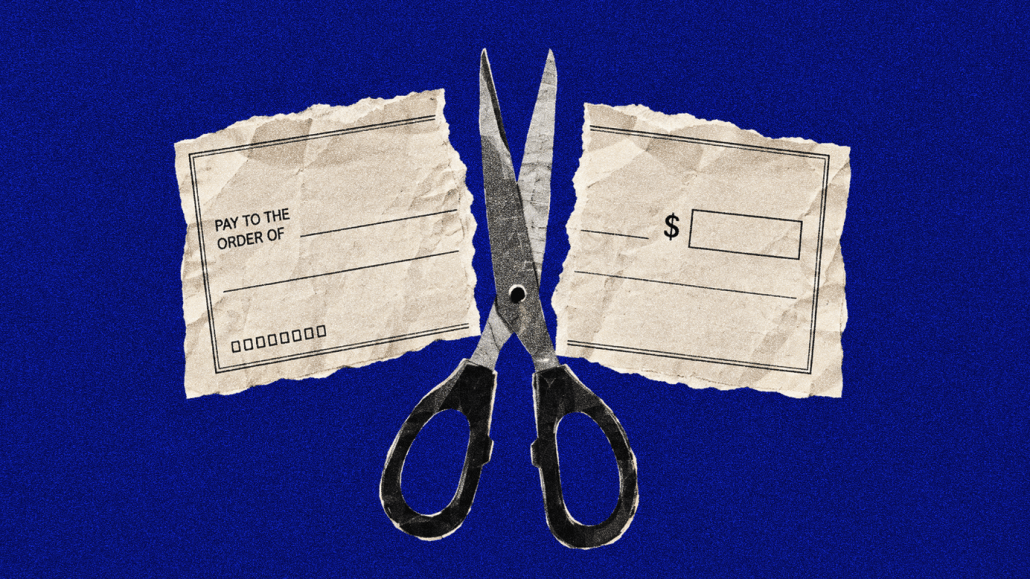
Depending on who you ask in the creator economy, they might say that clipping is dead.
The practice of sharing short clips from long-form content to boost the original content’s audience or promote a brand, exploded in popularity over the last few years, with major creators like Jimmy “MrBeast” Donaldson, Cody “Clix” Conrad, and Eric “Airrack” Decker starting their own clipping companies. It catapulted certain creators into the spotlight and encouraged brands to hire clippers to give their branded partnerships extra airtime.
In short, what began as fans sharing clips has grown into a billion-dollar distribution business.
But some platforms are now tightening the rules around clipping. TikTok and YouTube have been cracking down on non-original and mass reposting content. Last week, Instagram added a content protection feature previously available only on Facebook, which lets eligible creators automatically identify videos matching their original content. They can now see how those videos perform and decide whether to hide them from people on the platform, add a credit link, or let the videos stay up. That gives creators more visibility and control over where their content appears, making clipping less of an open-ended reporting play and more subject to the original creator’s say.
“Creators deserve credit for the work they make,” a Meta spokesperson told Digiday. “[This] builds on our broader efforts to prioritize and reward original content and creativity over re-uploaded posts that don’t add a unique perspective or meaningful edits.”
And yet, platforms aren’t all moving in the same direction: Twitch is investing further into clipping to try and claw back the short-form real estate it’s ceded to other platforms. To understand what’s driving these diverging approaches, and what they mean in practice, Digiday spoke with seven experts across the clipping ecosystem.
“Ask 10 people [what clipping is] and you’ll probably get eight different answers,” said Darren Clover, CEO of creator-led holding company Full Box Inc., which owns Reach Clipping. “We define clipping as skilled editors taking existing source material and transforming it into unique pieces of short-form content…Those videos are then distributed across individual social accounts. That’s very different from downloading someone else’s TikTok and reposting the exact same video across hundreds of accounts.”
Ad position: web_incontent_pos1
Opinions also differ around whether clipping works as a performance marketing channel or if it’s just a good distribution method. A few days ago, Brian Blum, host of the Only Sweat Equity podcast, posted on X that clipping “has actually always been dead.” He told Digiday he meant that it has never worked as a performance marketing channel.
Blum’s concern is that clipping can produce impressive view counts without reaching people likely to buy. He said campaigns can be vulnerable to fraud and attract audiences that may not be a fit for the product.
“It doesn’t have necessary protections to prevent viewbotting or fraud…So you’re actually just lighting money on fire,” he said.
Nikolai Amirzadeh, co-founded of clipping company Clip Tech, said clips can function as both marketing and distribution tools if the clipping company in question does the work to ensure views are valid.
“It is priced like performance, you pay per 1,000 verified views and nothing for clips that flop. It behaves like earned media, because it is native posts from real accounts, not ads. Brands typically pay $1 to $4 per thousand verified views, against $10 to $80 or more for traditional paid social,” Amirzadeh said. “Anything that looks off goes to the fraud team, and the clipper is not paid until it is cleared. A view is still a view by each platform’s own definition, which is a low bar. That is why the serious brands look at the top clips, watch time and what happens downstream, not just the view total.”
Ad position: web_incontent_pos2
Controlling the clip
Then there’s the question of control: As clipping spreads and platforms tighten their rules, creators and their partners are increasingly concerned about how clips are edited and shared, and whether they could create brand-safety risks.
“Clipping is kind of a double-edged sword. It can help creators gain visibility and show that people value their content, but it could also get them flagged as spam,” said Ashray Urs, head of Streamlabs.
That lack of control gives creators and their managers pause, according to Reed Duchscher, CEO of Night Management. “It’s hard to control any of it,” he said. “Even when you put out a bounty for someone to clip something, you still have very limited control of what is posted, how it’s posted,” he added, pointing to the common practice of people clipping streamers out of context to farm outrage or drama.
Instead, their clients, like mega creator Kai Cenat, have their own in-house clippers, which allows for more control and, crucially, legitimate measurement.
Expect this to be an increasingly popular approach in the next year. “Sometimes with these clipping companies you can’t understand if the views are legitimate or not…you don’t know if they’re paid views or not paid views because you’re not controlling the TikTok accounts and not posting the videos. So we’re a little nervous about that,” Duchscher said.
With platforms cracking down on recycled content, the age of the clip farm may be over. But clipping itself isn’t.
Mustafa Aijaz, vp of media company SoaR, thinks clipping is no longer a low-effort gold rush. “A quick cut and post won’t get you very far,” he said. “You need a different caption, some commentary, or a breakdown — something that adds to the raw clip itself. If you’re different, the platform treats you differently. But if you look exactly like the other posts, you’ll likely be throttled.”
And as the demand for clips has grown, some have leaned into the more negative aspects of clipping, like taking creators out of context or clipping moments that are less than flattering. This influx of negative framing or drama farming has shifted creators’ opinions on external clippers.
Add that to the clipping companies’ increased selectiveness and rising rates, and something’s gotta give, according to Brandy Merriweather, founder and senior PR executive at BSTarPR.
“Many successful clipping pages have secured partnerships with gambling entities, music labels, creator management companies, creator collectives, and streaming platforms. Consequently, they are becoming more selective about which creators they post, their rates, and the frequency of posting for specific creators,” she said.
Merriweather told Digiday she’s seen creators have to pay extra money to clippers to switch priority streaming platforms.
“It’s a BIG business filled with egos, narrative control, fabricated numbers, unethical and sometimes purposely false content all going to the highest bidder,” she said. To avoid price gouging or unfair depictions, creators need to take clipping into their own hands. “What used to be a vehicle to gain visibility has now turned into an accountability stage that creators have no control over since many don’t own these pages. The creators, their families, and their teams are being used to create drama and fuel negativity which algorithms have prioritized because of the engagement….It’s a system many helped build that now controls them.”
Merriweather’s solution matches the other experts Digiday spoke with: creators have to create their own clipping networks to ensure they have control over their content and a proper understanding of how it’s performing.


More in Media

OpenAI rewrites ChatGPT Business Hub terms after legal language raises concerns
OpenAI revised its ChatGPT Business Hub terms following concerns that the original language could restrict businesses’ legal claims.
GTA 6 could be a windfall for creators, but standing out will be tough
Grand Theft Auto 6 has its own content creator cottage industry, with millions of views and a crowded, competitive marketplace.
Media Briefing: ChatGPT’s new business hub is an early ‘search console moment’ for publishers
ChatGPT’s new AI visibility and click data can help inform publishers’ GEO strategies and complement third-party analytics.
Ad position: web_bfu