Save 50% on a 3-month Digiday+ membership. Ends Dec 5.
How generative AI is muddying copyright laws – what businesses need to know
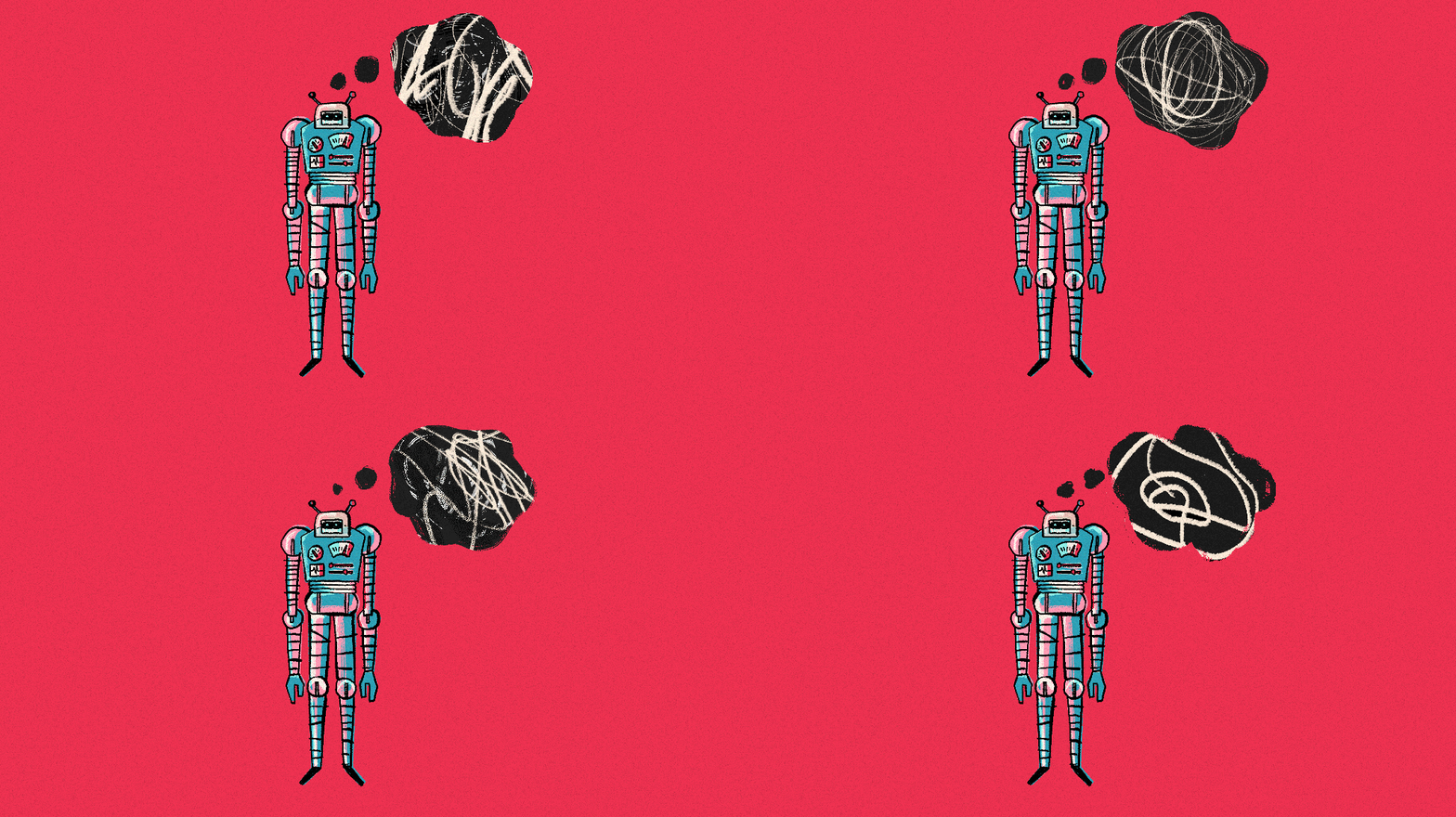
This article was first published by Digiday sibling Worklife
Elon Musk and almost 4,000 high-profile signatories, including engineers from Amazon, DeepMind, Google, Meta, and Microsoft, attempted to halt the giddying acceleration of generative artificial intelligence in an open letter published in late March.
“Recent months have seen AI labs locked in an out-of-control race to develop and deploy ever more powerful digital minds that no one – not even their creators – can understand, predict, or reliably control,” read the letter. “Powerful AI systems should be developed only once we are confident that their effects will be positive and their risks will be manageable.”
Everyone should take note when the brightest human – rather than machine – minds are demanding progress be paused. But has the bot not already bolted? And considering the possible competitive advantages if rivals opt to down AI tools, will the temptation to continue pushing the boundaries of technology beyond their current limits not be too irresistible for business leaders?
Many have wasted little time embracing ChatGPT, a large-scale language model fed 300 billion words by developer OpenAI that is “confidently incorrect,” and DALL-E, a similar tool that generates images rather than words. While interest has surged in the former, potentially the bigger, creepier issues are around the latter, specifically copyright infringements.
To read the full article over on WorkLife click here.


More in Media
What publishers are wishing for this holiday season: End AI scraping and determine AI-powered audience value
Publishers want a fair, structured, regulated AI environment and they also want to define what the next decade of audience metrics looks like.

Digiday+ Research Subscription Index 2025: Subscription strategies from Bloomberg, The New York Times, Vox and others
Digiday’s third annual Subscription Index examines and measures publishers’ subscription strategies to identify common approaches and key tactics among Bloomberg, The New York Times, Vox and others.

From lawsuits to lobbying: How publishers are fighting AI
We may be closing out 2025, but publishers aren’t retreating from the battle of AI search — some are escalating it, and they expect the fight to stretch deep into 2026.
Ad position: web_bfu