Save 50% on a 3-month Digiday+ membership. Ends Dec 5.
Digiday Research: How Japanese marketers use influencer marketing
This research is based on unique data collected from our proprietary audience of publisher, agency, brand and tech insiders. It’s available to Digiday+ members. More from the series →
Digiday’s “Research in brief” is our newest research installment designed to give you quick, easy and digestible facts to make better decisions and win arguments around the office. They are based on Digiday’s proprietary surveys of industry leaders, executives and doers. See our earlier research on the state of the agency world here.
At last month’s Hot Topic: Data-Driven & Content Marketing event in Tokyo, we sat down with 22 executives from brands, agencies, and publishers to get their insight on the influencer and platform marketing issues facing marketers.
Driving sales isn’t the point of influencer marketing campaigns in Japan
Marketing in Japan poses a daunting challenge for foreign and domestic companies alike. To bridge the gap to Japanese consumers, brands such as Dyson are increasingly relying on influencers to connect them with their target audiences.
Forty-three percent of respondents thought increasing brand awareness among consumers was the optimal use for influencer marketing. Half as many respondents, 23 percent, thought that influencer marketing was better at galvanizing purchases either in stores or online than building brand awareness.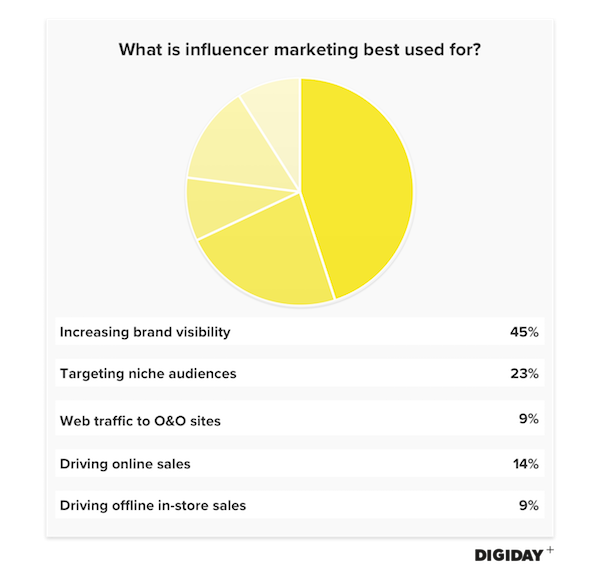
Challenges of influencer marketing vary
Respondents were divided on what they found to be the biggest challenge of influencer marketing. Finding influencers with the desired target audience was the biggest gripe, but just over a quarter of respondents chose that option. Having influencers utilize the right platform and execute campaigns as planned were also common concerns.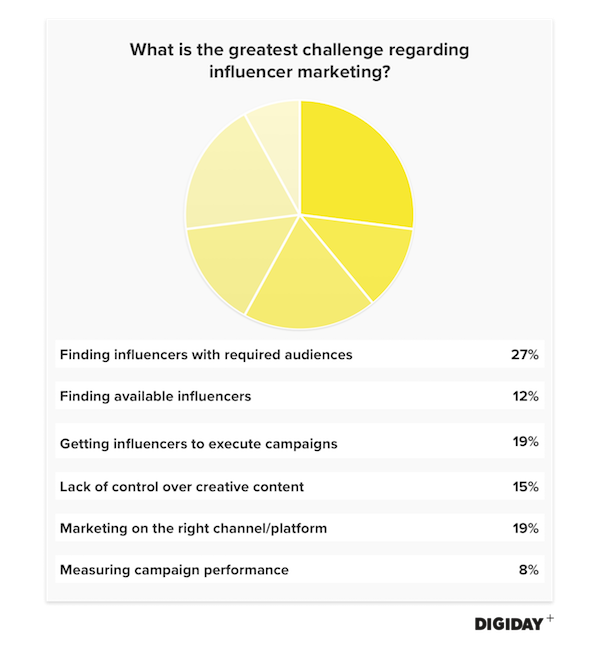
Influencers’ failure to follow through on their campaigns is a noted industrywide issue. To address such complaints, Japanese tech companies are taking matters into their own hands. BitStar recently collected $2.7 million in funding to help brands connect with YouTube stars and manage campaigns. Meanwhile, Couture offers a platform that charges brands on a per-engagement basis to avoid headaches when influencers drop the ball.
Influencer marketing is viewed as effective
Global spend on influencer marketing is accelerating. Marketing across Instagram already totals over $1 billion annually. However, digital accounts for only 15 percent of the $60 billion spent on advertising per year in Japan.
Ad position: web_incontent_pos1
More than twice as many respondents thought their influencer campaigns were effective or very effective than those who thought they were not very or not at all effective. If influencer marketing continues to be considered effective, the proportion of ad dollars spent on digital in Japan could increase.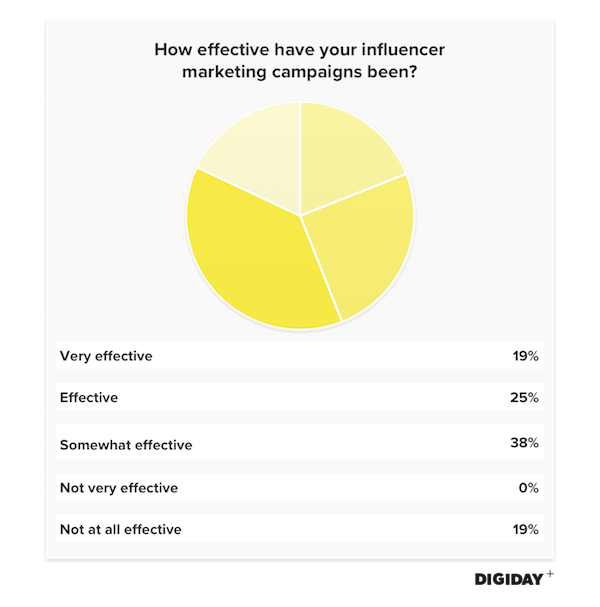
More in Media

What publishers are wishing for this holiday season: End AI scraping and determine AI-powered audience value
Publishers want a fair, structured, regulated AI environment and they also want to define what the next decade of audience metrics looks like.

Digiday+ Research Subscription Index 2025: Subscription strategies from Bloomberg, The New York Times, Vox and others
Digiday’s third annual Subscription Index examines and measures publishers’ subscription strategies to identify common approaches and key tactics among Bloomberg, The New York Times, Vox and others.

From lawsuits to lobbying: How publishers are fighting AI
We may be closing out 2025, but publishers aren’t retreating from the battle of AI search — some are escalating it, and they expect the fight to stretch deep into 2026.
Ad position: web_bfu