Save 50% on a 3-month Digiday+ membership. Ends Dec 5.
How Kind snack bars is using AI to curb creative, marketing costs at business ‘inflection point’
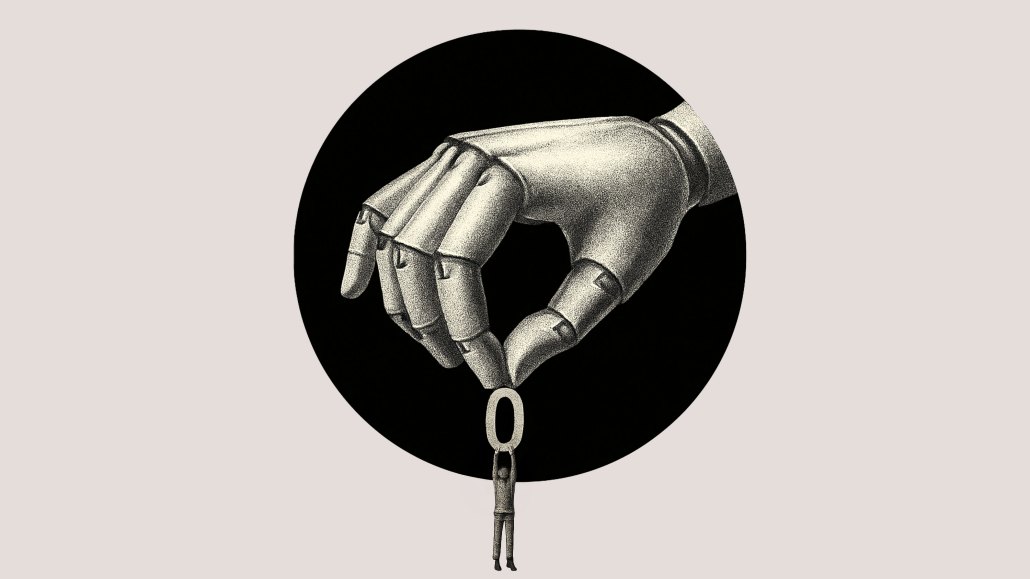
Kind snack bars is hedging its bets on using generative AI tools, like synthetic audiences and AI agents, to turn its business around. This year has been “an inflection point” for the Mars-owned snack brand, as Osher Hoberman, CMO at Kind North America, puts it.
Kind has been struggling to capture Gen Z’s attention and faces stiff competition from private label brands, Hoberman said. That pressure over the past year has pushed the snack brand to adopt generative AI to curb marketing costs and expedite the creative process.

Creative testing and learning used to take anywhere from three to four months, and $10 million in marketing spend, Hoberman said. With AI, that turnaround time has shrunk to a week or matter of days, he said.
Earlier this year in Q2, Kind started testing AI-powered creative to better target individual customers based on usage and preference. For example, showing Kind’s protein product in a post-workout recovery context for one customer and in a breakfast on-the-go setting for another.
At the same time, Kind built out synthetic audiences using models drawing from past audience work, campaign results and third-party syndicated data to better understand current and future shoppers.
“The way we targeted with the personalization was more effective in brand and sales lift than previous campaigns that weren’t addressable,” Hoberman said. He later added, “It helped us to be more efficient with our media spend and informed our media channel mix.”
Ad position: web_incontent_pos1
Increasingly, marketers are outsourcing consumer research and focus groups to LLMs and AI-powered chat bots. These synthetic audiences, which are programmed to respond like real customers, promise cheaper, faster feedback to close gaps between campaign or product ideation and launch.
It’s simply a matter of uploading a creative asset, and via text-based chat bot or even voice interface, asking the LLM to give feedback, according to Brian Yamada, chief innovation officer at VML.
But, Yamada and agency execs say, synthetic audiences shouldn’t be treated as the voice of God — rather as a supplement to marketing data points. Some experts say there are still limits — the output is only as good as the data feed into it and it can produce stale results if that doesn’t happen. Additionally, LLMs may not understand or pick up on cultural nuances in the same way a human would.
“It’s a model’s prediction of how it thinks that audience is going to respond. It isn’t that person,” Yamada said.
Kind’s uptick in AI usage, however, doesn’t reduce its reliance on agency partners, per Hoberman. In the surge of AI powered media buying and creativity tools, smaller and independent shops may find themselves on the defense. For Kind though, it changes the nature of the relationship, with agency partners, like Energy BBDO and Publicis Groupe, still accounting for 80% of Kind’s marketing work.
Ad position: web_incontent_pos2
“Now I can use my creative agencies more as brand stewards, more strategic thought partners and less like creative and production suppliers,” Hoberman said.
Hoberman said generative AI has shifted dollars away from non-working expenses, like agency production and fees, to advertising and promotion in campaigns. (Hoberman did not offer specific figures.) He did say, however, that Kind plans to move toward “a more addressable media approach in 2025 and beyond.”

More in Marketing

Ulta, Best Buy and Adidas dominate AI holiday shopping mentions
The brands that are seeing the biggest boost from this shift in consumer behavior are some of the biggest retailers.
U.K. retailer Boots leads brand efforts to invest in ad creative’s data layer
For media dollars to make an impact, brands need ad creative that actually hits. More CMOs are investing in pre- and post-flight measurement.
Ad position: web_bfu