Save 50% on a 3-month Digiday+ membership. Ends Dec 5.
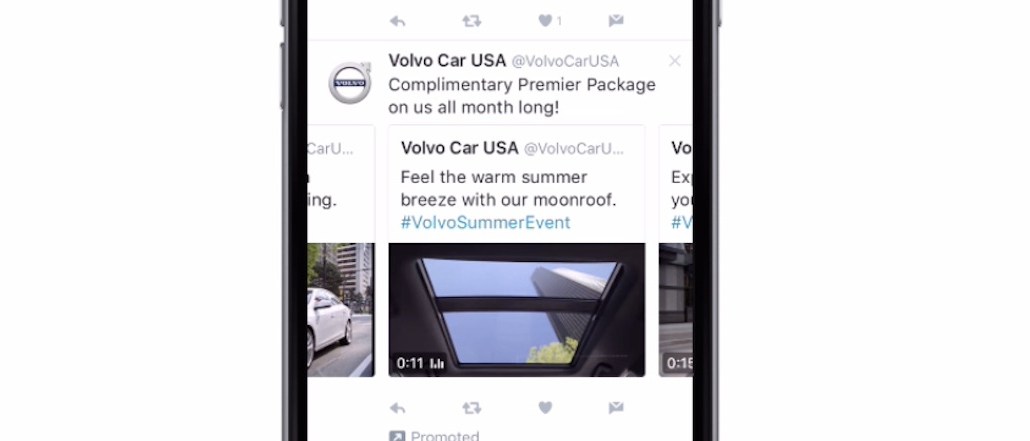
Twitter is rolling out an Instagram-like carousel ad more than six months in the making.
The new type of ad unit that lets brands place multiple tweets, in some cases from users themselves, in a carousel format that lets people swipe through. Digiday first reported in January that it was working on this.
— Twitter Advertising (@TwitterAds) June 3, 2016
The unit, called a “Promoted Tweet Carousel,” lets companies jam up to as many as 20 tweets into it, including videos, pictures and tweets from satisfied customers as long as they give the advertiser explicit permission to use their tweet. Twitter is charging companies only when a user engages with a tweet in the unit.
“Since people tweet about their favorite brands and products every day, we developed this powerful solution to help marketers leverage social recommendations,” Twitter explained in a blog post.
Agencies welcomed the new unit of using people’s tweet since a post from a normal sometimes holds more clout than a celebrity.
Twitter is also likely hoping to replicate Instagram’s monster success because people are 10 times more likely to engage with a carousel ad compared to a static ad on the Facebook-owned platform. Even just a little bit of Instagram’s advertising success could be a boon to struggling Twitter.
More in Media

What publishers are wishing for this holiday season: End AI scraping and determine AI-powered audience value
Publishers want a fair, structured, regulated AI environment and they also want to define what the next decade of audience metrics looks like.

Digiday+ Research Subscription Index 2025: Subscription strategies from Bloomberg, The New York Times, Vox and others
Digiday’s third annual Subscription Index examines and measures publishers’ subscription strategies to identify common approaches and key tactics among Bloomberg, The New York Times, Vox and others.

From lawsuits to lobbying: How publishers are fighting AI
We may be closing out 2025, but publishers aren’t retreating from the battle of AI search — some are escalating it, and they expect the fight to stretch deep into 2026.
Ad position: web_bfu