Save 50% on a 3-month Digiday+ membership. Ends Dec 5.
It’s no secret that Pinterest has a problem attracting male users. With a user base more than 70 percent female, according to comScore data from June, it remains the most gender imbalanced of the major platform players.
While over-indexing on women has been a selling point for Pinterest’s ad sales team, the company also recognizes it needs to become more bro-friendly if it’s to ever reach the scale it hopes to achieve. Some have said that the gender imbalance is self-perpetuating; a predominantly female user base results in mostly female-oriented pins, leaving men to feel that the experience does not speak to their interests.
“If you pull up Pinterest and go into any content section, you will see purses, dresses and women’s shoes because women are the user base,” DigitasLBi’s vp of social and content strategy, Jill Sherman, said in a previous interview. “When 70 percent of the users are female, then 70 percent of the content is going to be female-oriented.”
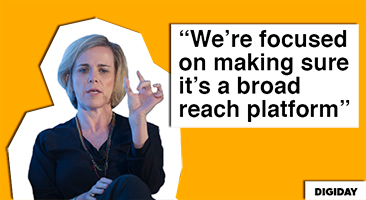
To that end, Pinterest is planning on making the sign-up process more welcoming for first-time male users, Pinterest’s head of partnerships, Joanne Bradford, said Thursday at the Digiday Platform Summit. Instead of being inundated with, say, women’s fashion items when they first sign on, male users would see items more stereotypically catered to their gender.
Watch Bradford address Pinterest’s “dude problem” and how Pinterest users are reacting to the platform’s ad rollout in the following video, filmed at the summit.
The View from Pinterest from Digiday on Vimeo.
Ad position: web_incontent_pos1
More in Media

What publishers are wishing for this holiday season: End AI scraping and determine AI-powered audience value
Publishers want a fair, structured, regulated AI environment and they also want to define what the next decade of audience metrics looks like.

Digiday+ Research Subscription Index 2025: Subscription strategies from Bloomberg, The New York Times, Vox and others
Digiday’s third annual Subscription Index examines and measures publishers’ subscription strategies to identify common approaches and key tactics among Bloomberg, The New York Times, Vox and others.

From lawsuits to lobbying: How publishers are fighting AI
We may be closing out 2025, but publishers aren’t retreating from the battle of AI search — some are escalating it, and they expect the fight to stretch deep into 2026.
Ad position: web_bfu