Save 50% on a 3-month Digiday+ membership. Ends Dec 5.
Google ‘Fortunetelling’ site is a bait-and-switch to draw attention to a humanitarian crisis
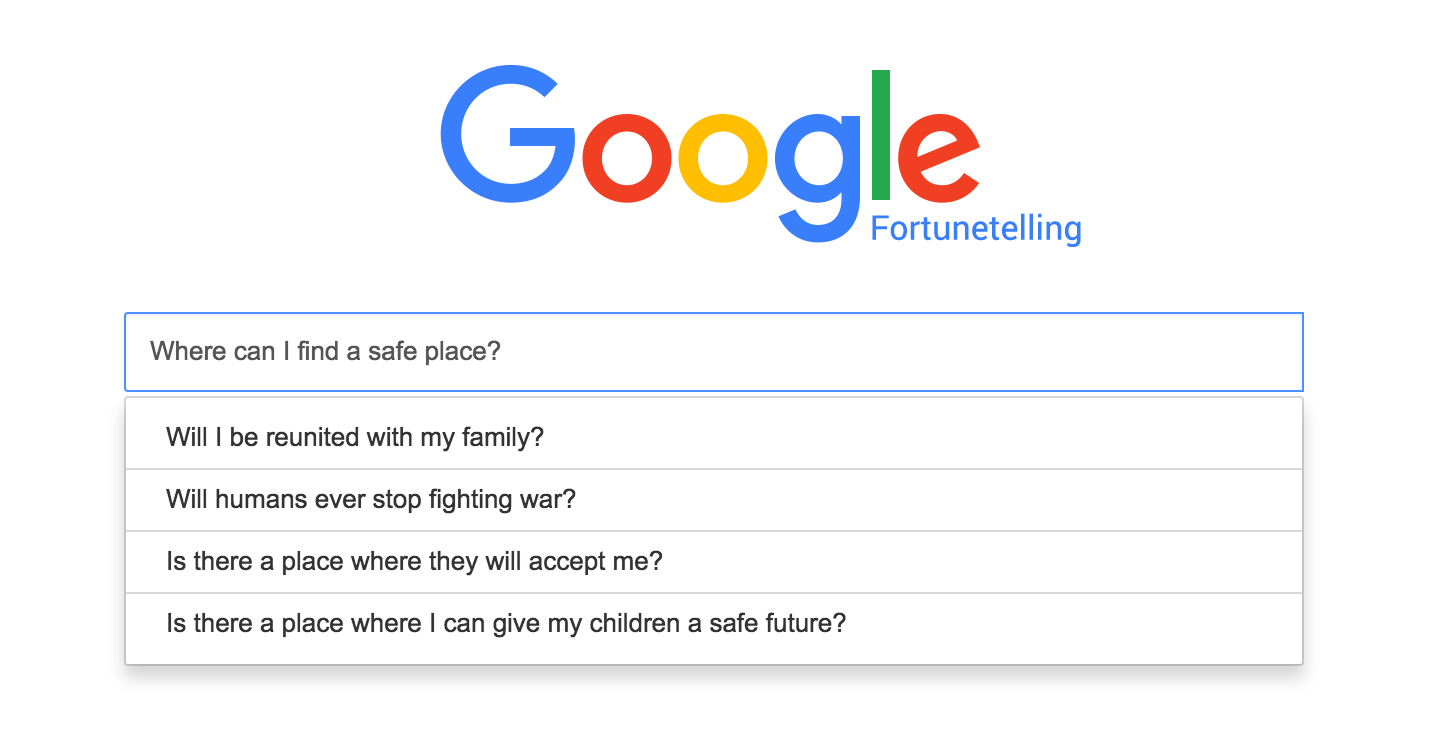
Google supposedly has all the answers, so it wasn’t surprising that when a new Google Fortunetelling site appeared on the web today, people couldn’t wait to see their futures revealed. What they got was something completely different. Betagoogle.com is a “fake Google-site” that promises to predict your future if only you will type a question into the search bar. The site’s interface looks almost identical to the real search engine, complete with its new logo.
But when users begin to type, the site takes over, autofilling the question “Where can I find a safe place?” and suggesting several others queries:
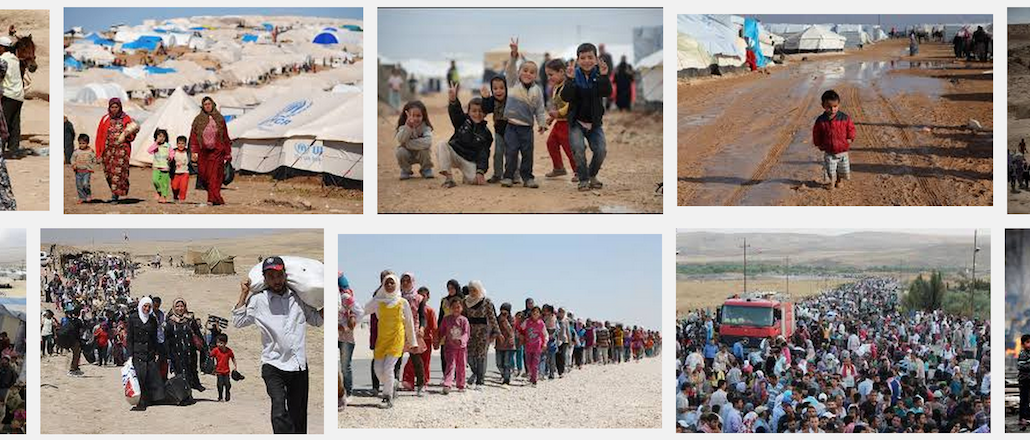
The search results: “OF COURSE WE CAN’T PREDICT YOUR FUTURE! But 60 million refugees ask themselves every day if they have a future at all. So we used a fake Google-site to get your attention because apparently you were interested in your own future. Please take a moment to think of their future.” A crystal ball on the right of the page tallies each additional refugee forced to flee their home during your time onsite.

Netherlands-based creative communications agency BrainMedia confirmed they are behind the site, which links to the donations page of UNHCR, the United Nations Refugee Agency.
“The campaign is very successful worldwide right now; it’s amazing. We are very happy that people care about this problem and are sharing it and creating awareness around the world,” said Jort Boot, owner of BrainMedia.
Ad position: web_incontent_pos1
Google is, of course, a well-known prankster, especially on April Fool’s Day, so many might have assumed this was the work of the Silicon Valley giant.
Google has its own efforts to help with the crisis already donating over $1 million to organizations providing humanitarian relief. The company also plans to match donations up to $5.5 million made on its refugee relief page for a total of $11 million. It is currently only $72,000 from its goal. Those donations will go to Network for Good and be further distributed to Doctors Without Borders, International Rescue Committee, Save the Children and UNHCR.
The Fortunetelling site encourages sharing on social, which many were doing by early afternoon. “Google Fortune Telling” was mentioned in 731 tweets in the past 24 hours, according to data from Topsy. Twitter users didn’t seem to be upset about the bait-and-switch at all.
I was skeptical, but this is really amazing: Google Fortune Telling: https://t.co/rtepjP6frO
— Jaclyn Friedman (@jaclynf) September 18, 2015
CHECK OUT THIS DOPE NEW GOOGLE SITE “Google Fortune Telling: what does your future look like? https://t.co/xLLKk4TyUu” so rad
— Mohammed Syed (@MSyedt) September 18, 2015
FINALLY – something from Google that I think is awesome! Google Fortune Telling: what does your future look like? https://t.co/BLDRMEeEBx — Stuart B (@brookieboy) September 18, 2015
Ad position: web_incontent_pos2
So Cool! What Does Your Future Look Like? Predict Your Future With @Google Fortunetelling: https://t.co/90fiZ3XERV pic.twitter.com/w8i9xKgbXF — USA for UNHCR (@UNRefugeeAgency) September 18, 2015
“We are flattered and appreciative of the encouragement of financial support,” said Brian Reich, who runs The Hive, a special project of USA for UNHCR. “This is a major global crisis and the more people who donate and become involved, the better things can become.”
More in Media

What publishers are wishing for this holiday season: End AI scraping and determine AI-powered audience value
Publishers want a fair, structured, regulated AI environment and they also want to define what the next decade of audience metrics looks like.

Digiday+ Research Subscription Index 2025: Subscription strategies from Bloomberg, The New York Times, Vox and others
Digiday’s third annual Subscription Index examines and measures publishers’ subscription strategies to identify common approaches and key tactics among Bloomberg, The New York Times, Vox and others.

From lawsuits to lobbying: How publishers are fighting AI
We may be closing out 2025, but publishers aren’t retreating from the battle of AI search — some are escalating it, and they expect the fight to stretch deep into 2026.
Ad position: web_bfu